




The Persian Gulf’s $100 Billion Gamble: Can These Megaprojects Survive the War?
The Persian Gulf’s $100 Billion Gamble: Can These Megaprojects Survive the War? From Saudi Arabia’s NEOM to the planned Gulf railway, the Persian Gulf’s megaprojects








Home » Mega Projects » Infrastructures

The Persian Gulf’s $100 Billion Gamble: Can These Megaprojects Survive the War? From Saudi Arabia’s NEOM to the planned Gulf railway, the Persian Gulf’s megaprojects

A Perspective by Yavuz Duvarchi, Urban Planning, Izmir Institute of Technology The connections between fossil fuels, transportation, environmental destruction, and global peace raise fundamental questions

Mayors and senior city officials from around the world have called for greater authority, financing and policy tools for cities to address some of the

London has published a new Draft London Plan, setting out a long-term framework for housing, infrastructure, employment, transport and urban development across the capital. Published

Melbourne’s Metro Tunnel has become one of the most significant transport infrastructure projects in Australia’s history, fundamentally reshaping the city’s rail network. After years of

Riyadh is poised to introduce self-driving taxis as part of Saudi Arabia’s broader initiative to modernize its transportation infrastructure and embrace smart mobility solutions. This

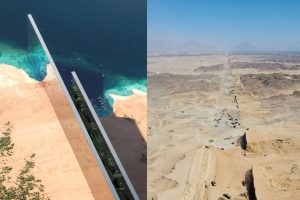
Saudi Arabia scales back its $500 billion NEOM megacity, with just 2.4km set for completion by 2030—a stark retreat from its original futuristic vision. Saudi

Dubai is a city that has been at the forefront of technology and innovation in recent years, and has made significant efforts to become a

The New Delta Project is a significant development initiative in Egypt that aims to establish a new agricultural region in the Western Desert. With an

South Korea’s Hanwha Corp. is resuming a $10 billion project to build the Bismayah new city in Iraq after a 16-month hiatus. The project, which

Bahrain and the UK recently held a meeting to discuss expanding their cooperation in the housing and urban planning sectors. The meeting, which took place

The government of Kazakhstan approved the plan for the agglomeration of Astana through to 2028 on February 27th. As the country’s capital since 1997, Astana