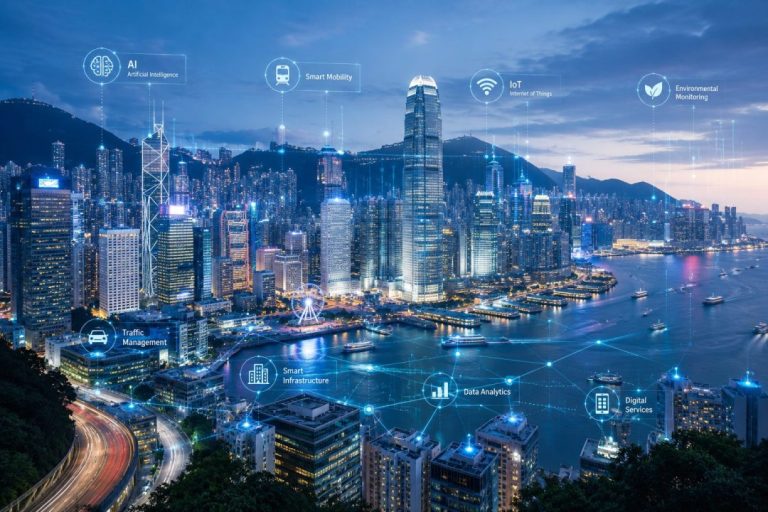







Hong Kong is accelerating its transformation into one of Asia’s leading smart cities by expanding the use of artificial intelligence (AI), the Internet of Things (IoT), big data, and digital infrastructure across urban services. The initiative is part of the government’s long-term Smart City Blueprint, which aims to improve mobility, public services, environmental monitoring, and urban governance through advanced technologies.
One of the key priorities is the deployment of real-time urban data platforms that collect and analyse information from transport systems, public facilities, weather stations, and utility networks. These integrated systems enable city authorities to respond more quickly to traffic congestion, infrastructure failures, and environmental challenges while improving operational efficiency.
Read More . . .
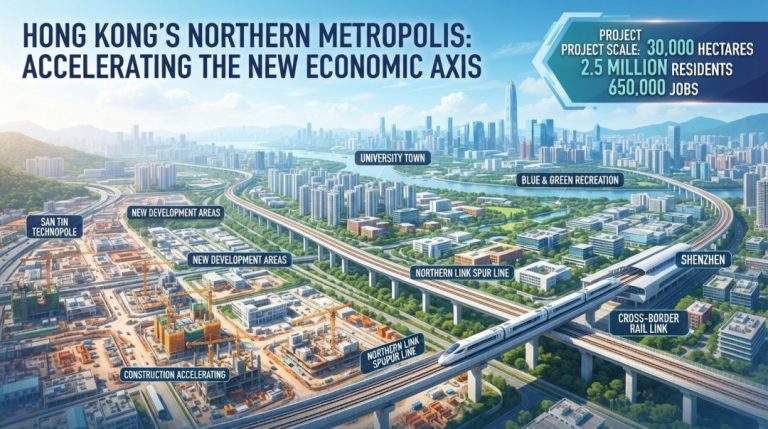
Northern Metropolis Hong Kong: A New City Takes Shape
Hong Kong is also investing in AI-powered traffic management, intelligent pedestrian crossing systems, and smart parking technologies to reduce congestion and improve road safety. In parallel, digital solutions are being introduced in healthcare, public administration, waste management, and emergency response, creating a more connected and responsive urban environment.

The city continues to expand its open data ecosystem, allowing government agencies, researchers, and technology companies to collaborate on innovative urban solutions. By combining digital governance with sustainable infrastructure, Hong Kong aims to strengthen its competitiveness as a global financial and technology hub while enhancing the quality of life for its residents.
Urban Impact
- AI-powered management of transport and public infrastructure.
- Faster response to traffic, emergencies, and city operations.
- Greater efficiency through IoT and real-time data analytics.
- Improved sustainability and environmental monitoring.
- Enhanced digital public services and citizen experience.