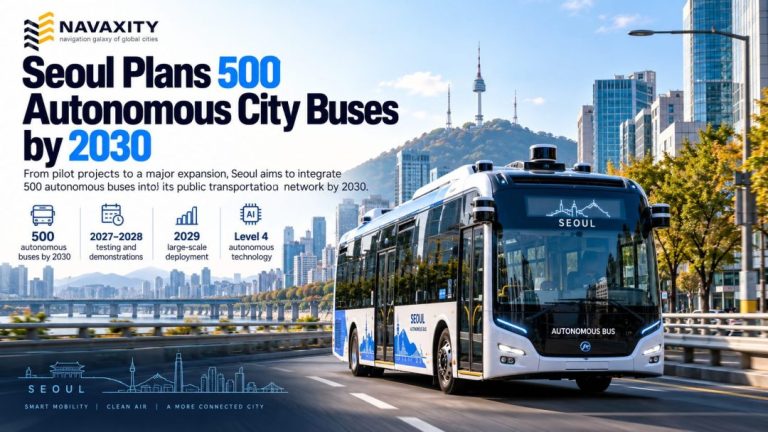






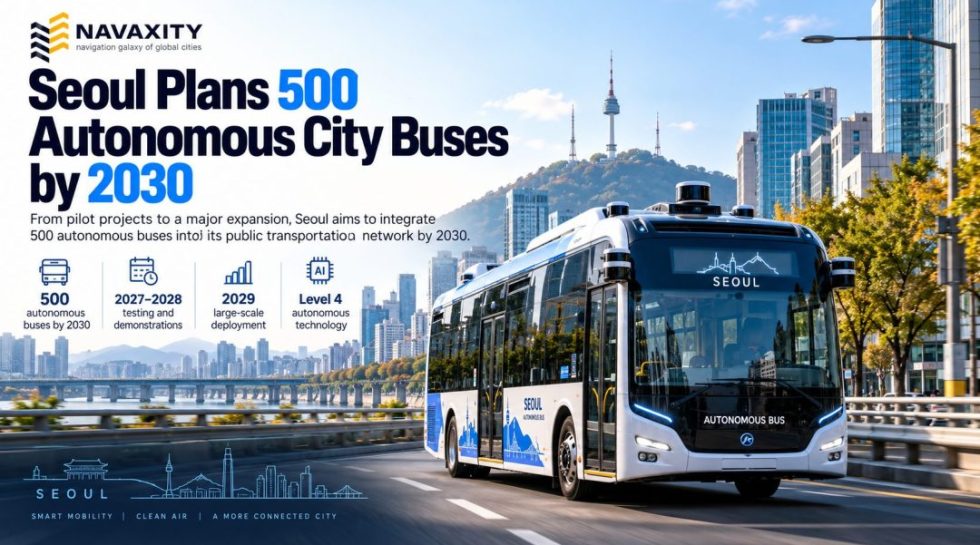
Seoul is moving from autonomous-bus trials toward large-scale deployment, with the city targeting a fleet of 500 autonomous buses by 2030.
The Seoul Metropolitan Government has signed an agreement with Hyundai Motor and the Seoul Bus Transportation Association to develop and commercialize Level 4 autonomous city buses, marking a shift from limited pilot projects toward the integration of autonomous vehicles into Seoul’s regular public transportation network.
Under the roadmap, Seoul and its partners will focus on vehicle and technology development and public demonstrations during 2027 and 2028. Large-scale deployment is scheduled to begin in 2029, with the city aiming to introduce a total of 500 autonomous buses by 2030, partly through the replacement of aging conventional buses.
From Pilot Projects to Regular Public Transit
Seoul has already accumulated experience with autonomous public transportation. The city has operated autonomous buses for early-morning workers and has also tested autonomous taxis on public roads.
The new program is different in scale and ambition. Rather than limiting autonomous buses to selected demonstration routes, Seoul intends to integrate them into the regular city-bus system, including the operational infrastructure required for dispatching, maintenance, charging, safety management and fleet control.
The city has previously announced a phased approach in which autonomous buses would initially operate on bus-only lanes and during selected periods, before gradually expanding into general traffic and broader operating hours as safety is demonstrated.
Hyundai to Develop a Dedicated Autonomous Bus
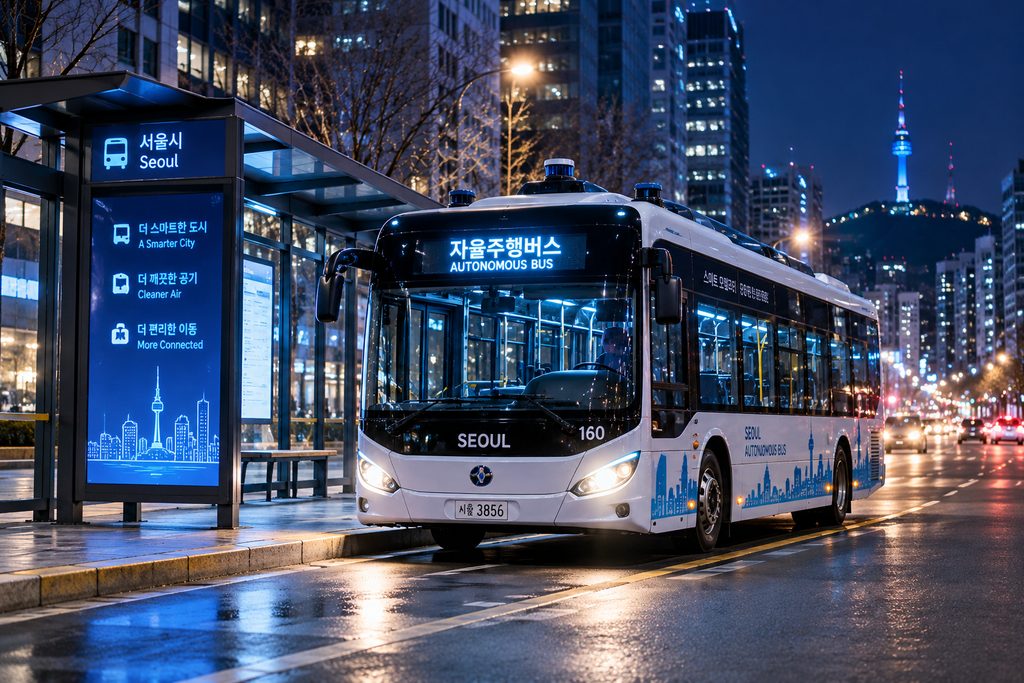
Under the new agreement, Hyundai Motor will develop and supply an approximately 11-meter dedicated bus platform designed specifically for autonomous driving.
The vehicle is planned to incorporate electronic control of steering, braking, doors and climate systems, together with redundant critical components and cybersecurity measures. The dedicated platform is intended to make it easier for autonomous-driving companies to develop and deploy their own AI software without repeatedly modifying conventional buses.
The Seoul Bus Transportation Association will contribute the operational side of the project, including drivers and control personnel during the transition period, depots, charging infrastructure and the operational expertise of existing bus companies.
Building an Autonomous Mobility Data Ecosystem
One of the more significant aspects of the project is its focus on data standardization.
Seoul plans to standardize the configuration and installation of sensors such as LiDAR and cameras and accumulate real-world data from autonomous bus operations. Within the applicable legal framework, the city intends to make standardized data available for technology development and testing by companies, universities and research institutions.
This could make Seoul more than a deployment market for autonomous vehicles. The city is attempting to create an urban testing and development ecosystem connecting vehicle manufacturers, AI companies, transport operators and mobility-platform businesses.
Why 500 Buses Matter
The significance of the 500-bus target is not simply the number of vehicles.
Seoul’s broader G3 Seoul Plan identifies autonomous mobility as part of a wider strategy covering urban space, housing, AI, economic development and quality of life. The city says its autonomous-bus fleet is expected to grow from the current level to 500 vehicles by 2030, with operating hours gradually expanding as safety is established.
The potential urban impact extends beyond transportation. If autonomous buses eventually reduce the need for dedicated parking and alter how streets and public space are used, the technology could influence street design, parking demand, accessibility and the distribution of urban space.
That is why Seoul’s experiment is worth watching beyond the transportation sector. The city is effectively testing whether autonomous mobility can become part of the urban infrastructure itself, rather than remaining a technology demonstration.
Seoul’s Autonomous Mobility Roadmap
| Year | Planned development |
|---|---|
| 2026–2027 | Development of autonomous city-bus prototypes |
| 2027–2028 | Technology development, testing and citizen demonstrations |
| 2028 | Pilot services and safety validation |
| 2029 | Beginning of large-scale deployment |
| 2030 | Target of 500 autonomous city buses |
Source: Seoul Metropolitan Government.
A Potential Model for Other Cities
Seoul’s strategy is notable because it combines vehicle technology, public transportation operations, AI data, infrastructure and regulatory preparation within a single urban program.
The city has previously described its goal as becoming a global leader in autonomous driving and has been developing citywide autonomous-driving infrastructure under its Autonomous Driving Vision 2030.
If the 500-bus program reaches full deployment, Seoul could provide one of the world’s larger real-world tests of autonomous public transportation. The key question will not simply be whether the buses can drive themselves, but whether autonomous technology can be integrated safely, economically and reliably into a complex metropolitan transit system.
References
- Seoul Metropolitan Government — Seoul to Introduce 500 Autonomous City Buses by 2030
- Seoul Metropolitan Government — Autonomous Bus Expansion and Public Transportation Innovation
- Seoul Metropolitan Government — G3 Seoul Plan
- Seoul Metropolitan Government — Seoul Autonomous Driving Vision 2030
- SBS News — Seoul to Introduce 500 Autonomous City Buses by 2030 in Partnership with Hyundai Motor