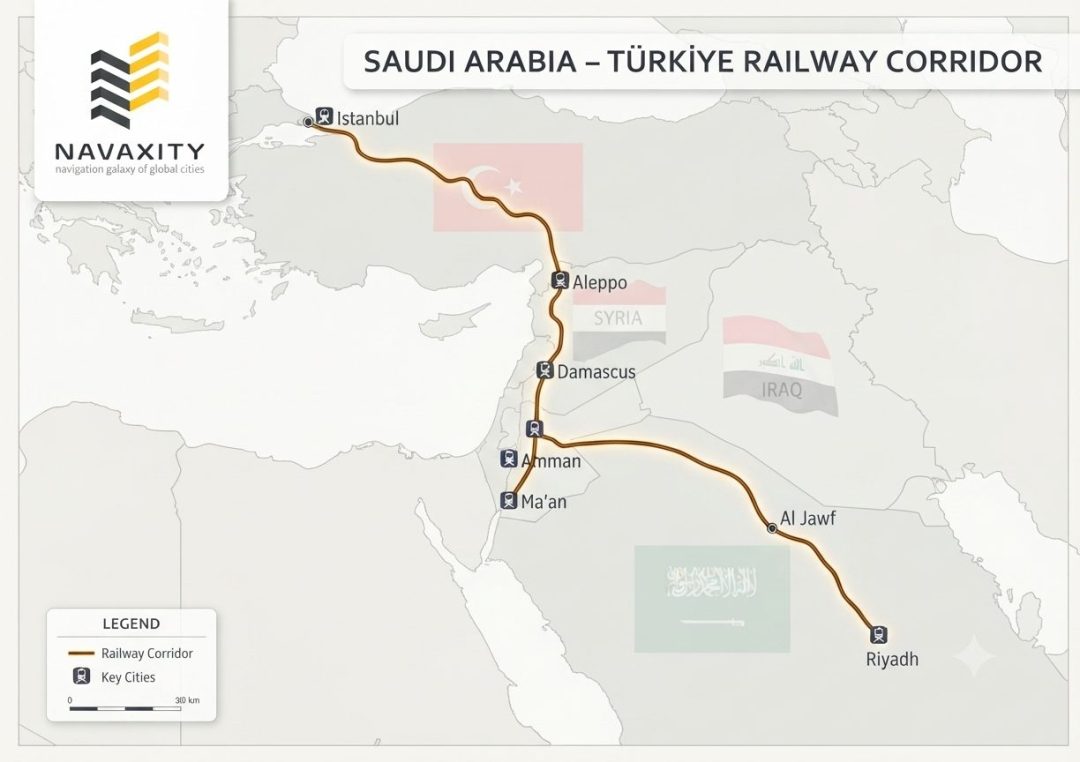
The officially announced international corridor connects Saudi Arabia with Jordan, Syria, and Türkiye before joining the European railway network. While the participating governments have not yet published a detailed city-by-city alignment, the corridor is expected to utilize Saudi Arabia’s expanding national railway system.
Dammam → Riyadh → Saudi National Railway Network → Al Qurayyat → Amman → Damascus → Aleppo → Gaziantep → Ankara → Istanbul → European Rail Network
From a logistics perspective, King Abdulaziz Port in Dammam serves as the primary eastern gateway, enabling freight arriving from the Arabian Gulf to move across Saudi Arabia toward Jordan and onward to Europe.
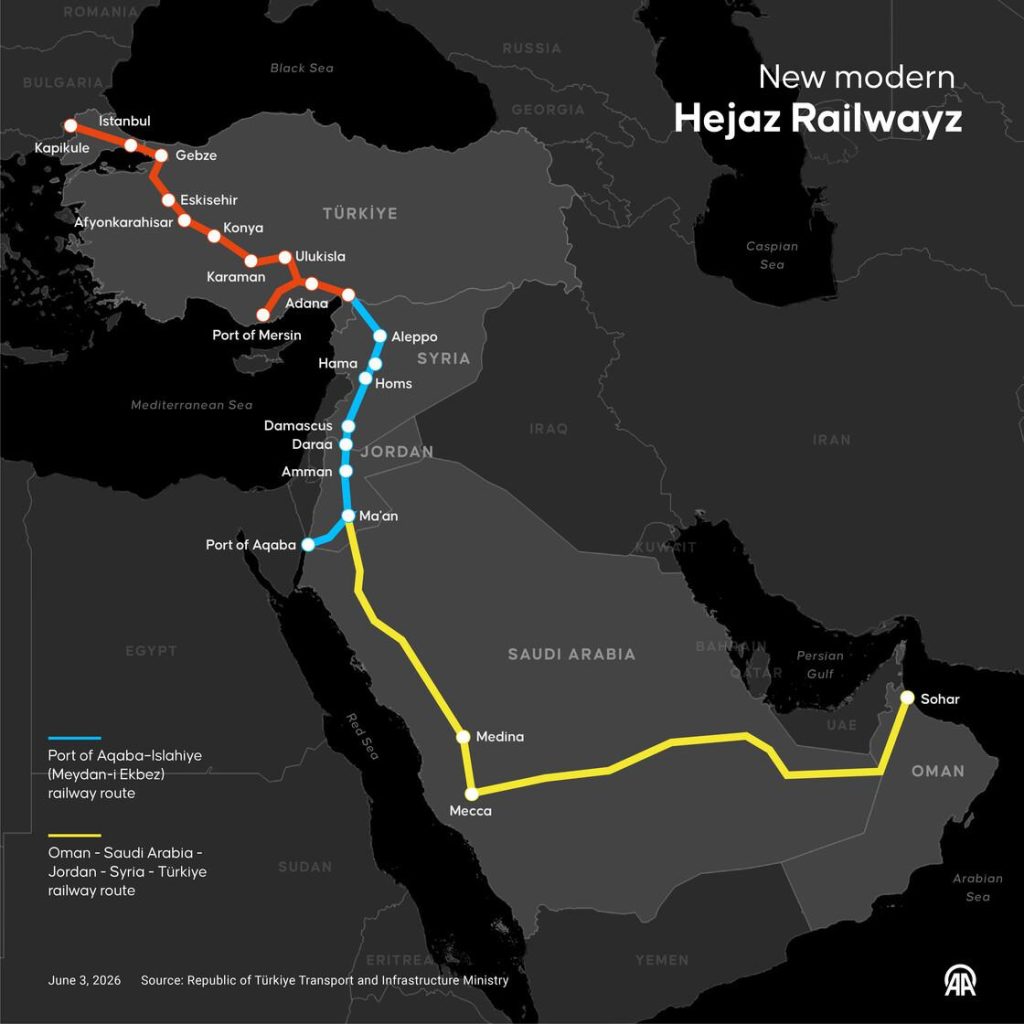
It is worth mentioning that with the operation of the Union Railway, other international corridors and their associated cities in regional countries – including the UAE, Qatar, and Oman – will also be able to link up with this corridor, making it possible to travel by train all the way from Dubai to Istanbul.
| Country | Major Cities |
|---|---|
| Saudi Arabia | Dammam, Riyadh, Al Qurayyat |
| Jordan | Amman |
| Syria | Damascus, Aleppo |
| Türkiye | Gaziantep, Ankara, Istanbul |
| Europe | European Railway Network |
Although engineering studies are still underway, the proposed corridor is expected to include:
The corridor follows the broader concept of reconnecting parts of the historic Hejaz Railway, which linked Damascus and Medina during the early twentieth century.
Unlike the original railway, the new corridor is planned as a modern international freight and passenger network using contemporary railway standards and digital operating technologies.
The Saudi Arabia-Türkiye Railway Corridor has the potential to reshape regional logistics by creating a new overland trade axis between the Gulf and Europe.
Its strategic importance includes:
The project is currently in the feasibility and technical planning phase.
The expected development schedule is:
| Phase | Expected Timeline |
|---|---|
| Feasibility Studies | 2026 |
| Detailed Engineering & Financing | 2027 |
| Construction | Subject to final approvals |
| Potential Initial Operations | Around 2030 (indicative) |
The implementation schedule will depend on financing, engineering progress, and regional political stability.
No official project budget has been announced by the participating governments.
Independent infrastructure analysts estimate that constructing the missing railway sections and upgrading existing infrastructure across the corridor could require investments ranging from US$10 billion to US$15 billion. These figures remain preliminary and have not been officially confirmed.
As of 2026: