


Istanbul

Istanbul is Türkiye’s largest city and one of the world’s most important metropolitan centers, extending across Europe and Asia on both sides of the Bosphorus. With a population of more than 15.7 million, the city is a major center for finance, trade, tourism, culture, transportation, and international connectivity.
Population: 15.75
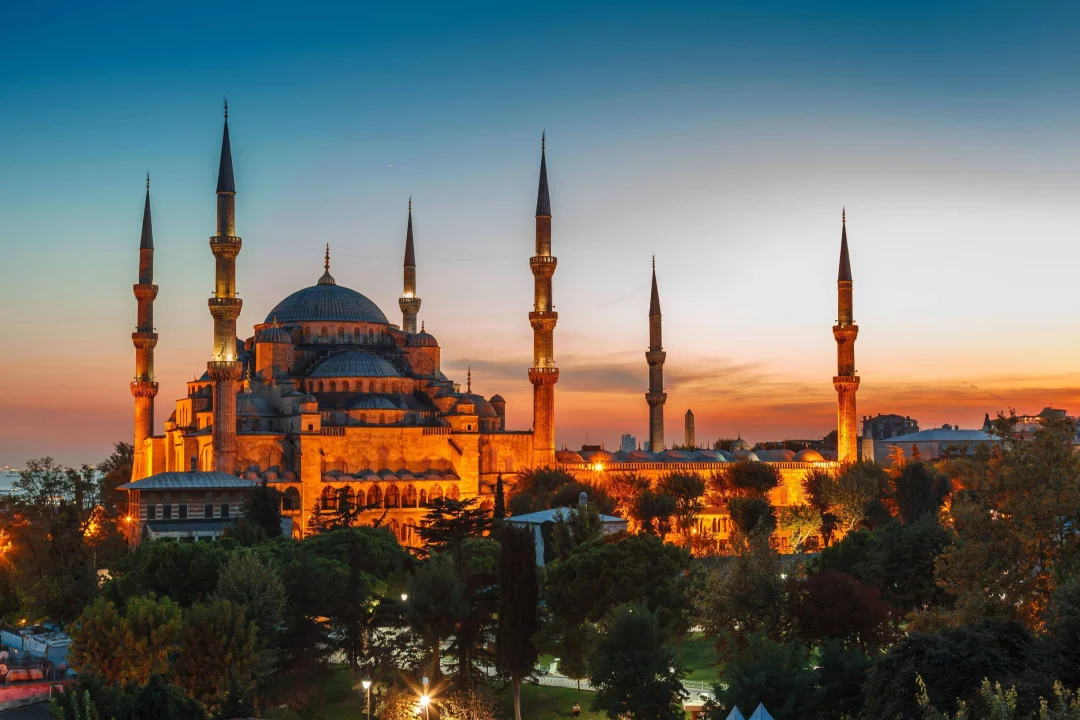
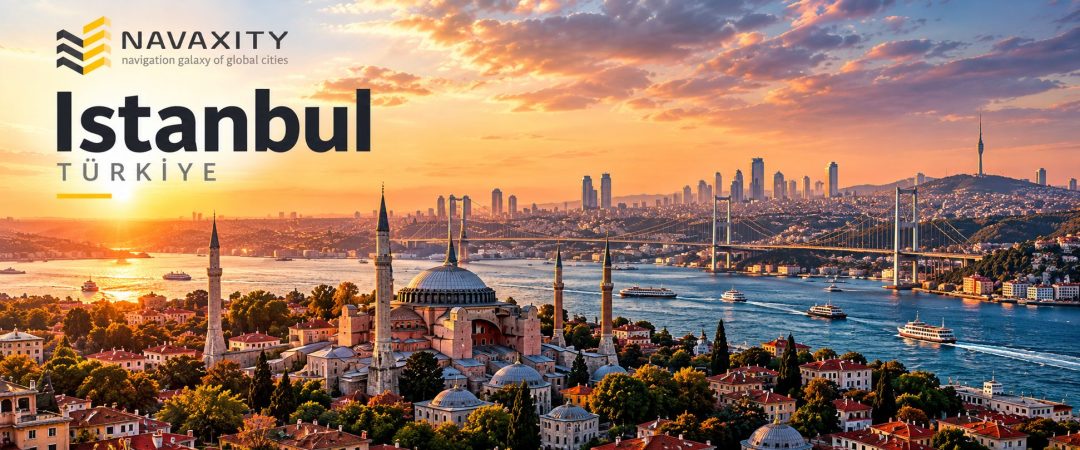
Istanbul skyline at sunset with the Bosphorus, bridges and historic city center

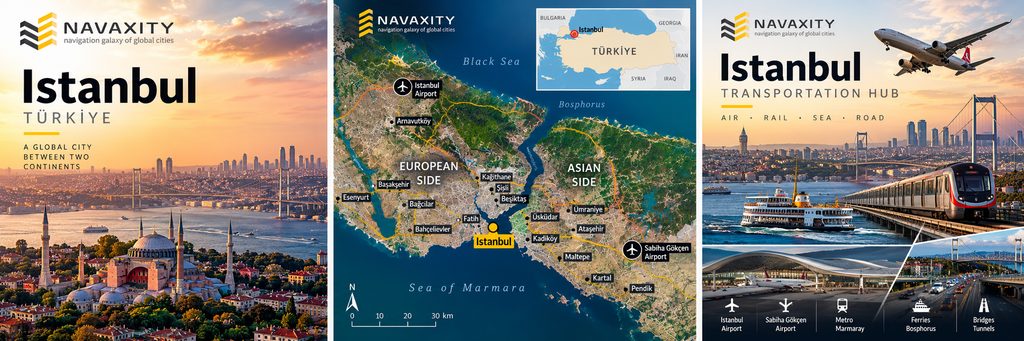
Istanbul: A Global City Between Two Continents

Istanbul is a unique metropolis connecting Europe and Asia across the Bosphorus. Its geographic position has shaped the city’s history and continues to influence its role in international trade, transportation, tourism, and investment.

The city combines historic districts, dense residential areas, modern business centers, major transport infrastructure, and rapidly developing urban districts. From the historic peninsula and the Golden Horn to the growing districts on the European and Asian sides, Istanbul has developed into a vast metropolitan area with a complex urban structure.

Istanbul is also one of Türkiye’s most important economic centers. Finance, manufacturing, logistics, tourism, retail, construction, technology, and international trade all contribute to the city’s economy. Its location between the European, Middle Eastern, Central Asian, and Black Sea markets gives Istanbul an important position in regional commerce.

The Bosphorus remains one of the defining elements of the city. The strait separates the European and Asian sides of Istanbul while also providing a maritime connection between the Black Sea and the Sea of Marmara.
Istanbul’s population reached 15,754,053 in 2025, making it Türkiye’s most populous province and accounting for around 18.3% of the country’s total population (Türkiye Today).

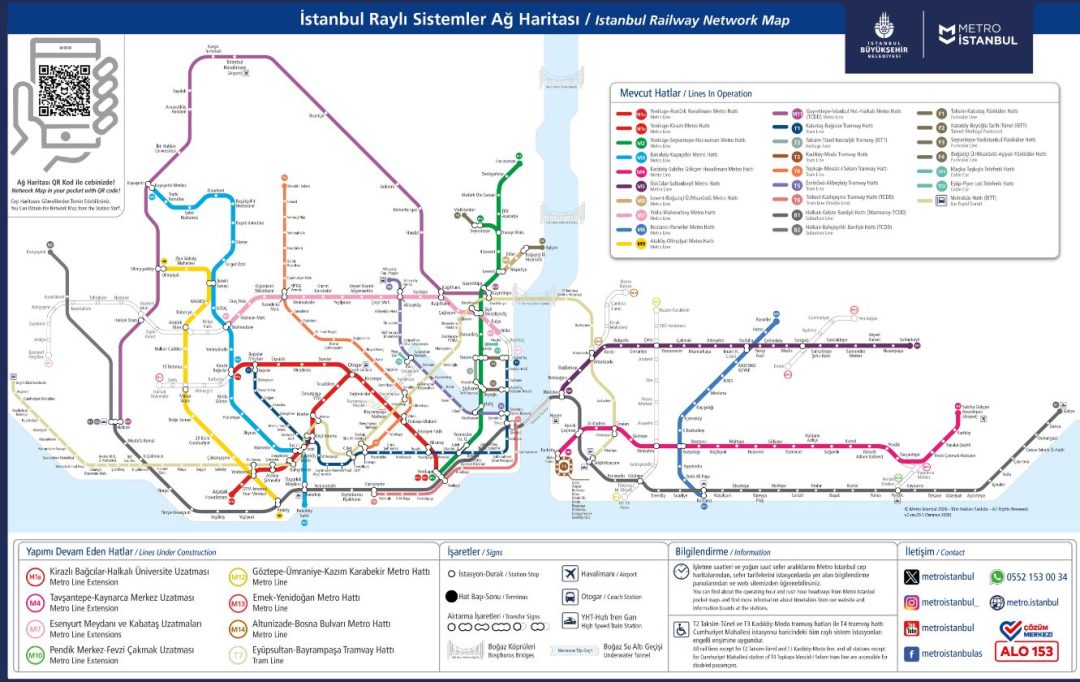
The city’s scale has also created significant demand for transportation infrastructure. Istanbul’s urban rail network has expanded substantially, with Metro Istanbul reporting a total urban rail system network of 402.60 kilometers and 18 Metro Istanbul-operated lines covering 245.75 kilometers. The system serves more than three million passengers every day.

Istanbul’s Economy

Istanbul is the financial and commercial center of Türkiye and one of the principal business hubs between Europe and Asia. The city’s economy is highly diversified. Financial services, international trade, manufacturing, logistics, tourism, real estate, technology, retail, and creative industries all play important roles in the metropolitan economy.

Istanbul’s strategic location has helped it develop into a major logistics and transportation hub. The Bosphorus provides a maritime gateway between the Black Sea and the Mediterranean, while the city’s airports and rail connections provide links to destinations across Europe, Asia, the Middle East, and beyond.

The city’s large consumer market and concentration of businesses also make Istanbul an important location for national and international companies.

Istanbul’s Cultural Heritage

Istanbul is one of the world’s major historic cities, with layers of Roman, Byzantine and Ottoman history visible across its urban landscape.

The historic peninsula contains some of the city’s most important landmarks, including Hagia Sophia, the Blue Mosque, Topkapı Palace and the Grand Bazaar. The Bosphorus waterfront, Golden Horn, Galata, Beyoğlu and Üsküdar add further layers to the city’s architectural and cultural identity.

Beyond its historic attractions, Istanbul has developed a contemporary cultural scene with museums, galleries, universities, performance venues, restaurants and creative industries.

Tourism remains an important component of the metropolitan economy, while the city’s cultural institutions contribute to its international profile.
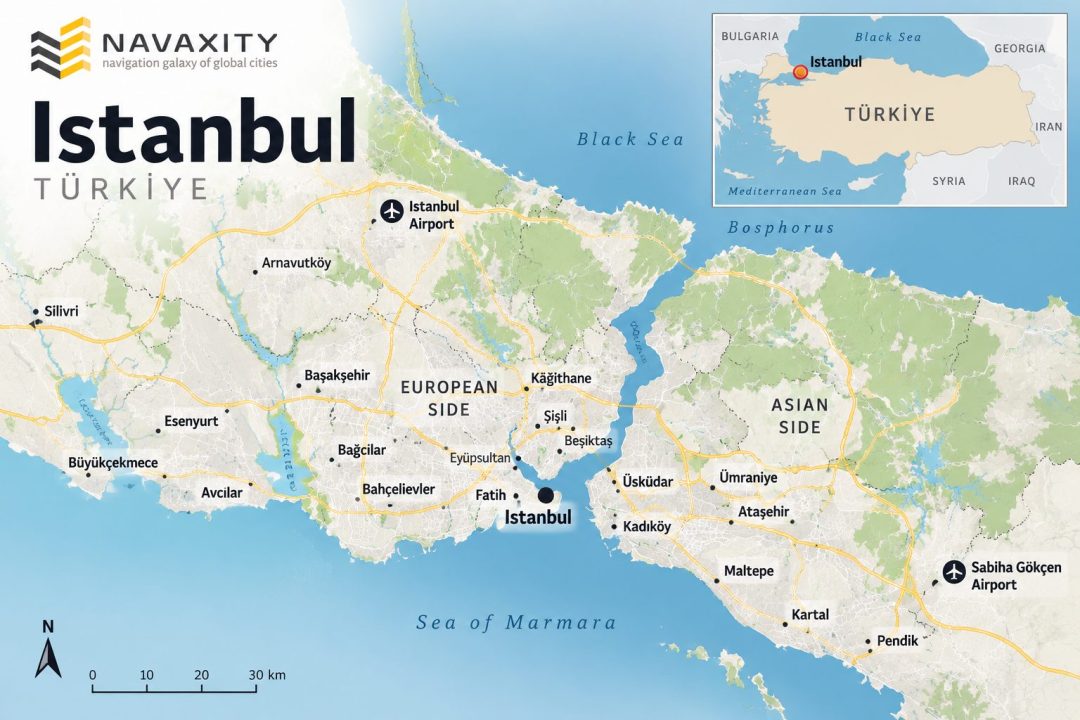
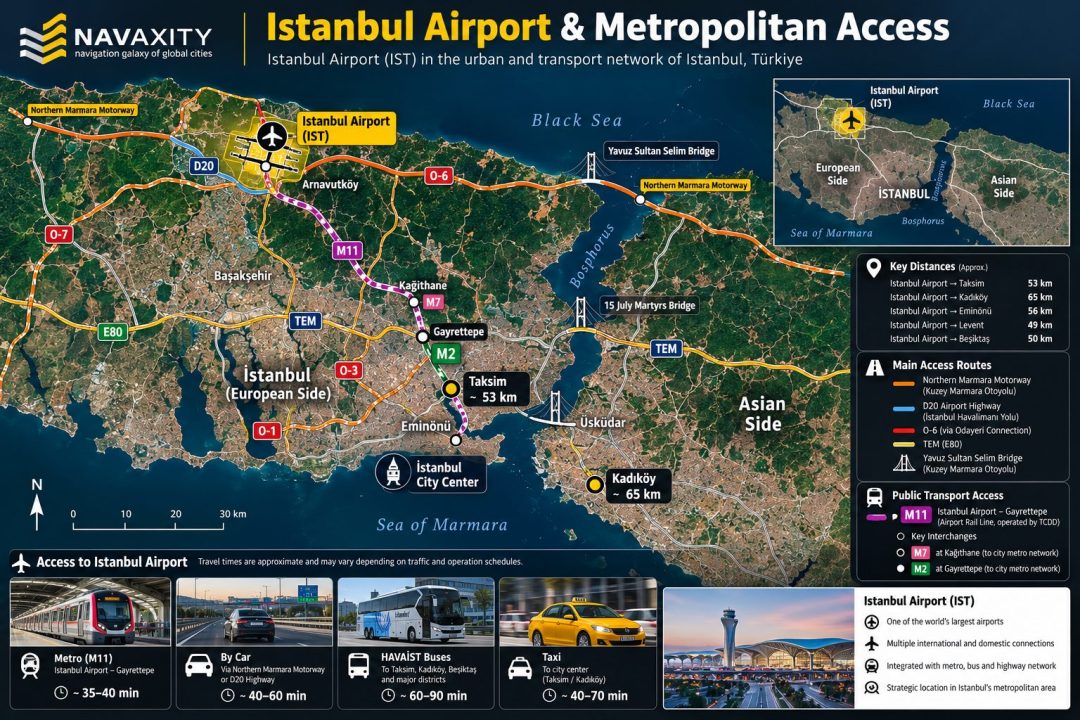
Map of Istanbul

Map of Istanbul, Türkiye showing the European and Asian sides, Bosphorus, major districts, airports and transport routes
Istanbul skyline at sunset with the Bosphorus, bridges and historic city center

Istanbuls famous foods:

%name%

Jooje kabab is a popular Persian dish, consisting of grilled chicken skewers marinated in a blend of lemon juice, saffron, yogurt, garlic, and spices. The chicken is often served with saffron rice, grilled vegetables, and a side of sumac, a Middle Eastern spice used for flavoring. Jooje kabab is a staple of Persian cuisine and is typically enjoyed during family gatherings and celebrations. While it is traditionally cooked on a charcoal grill, this dish can also be prepared on a gas grill or even in the oven. Jooje kabab is not only delicious but also nutritious, with high protein content, vitamins, and minerals. It is a dish that is enjoyed globally and is a great representation of Iranian cuisine.

Transports

Air

Istanbul is served primarily by Istanbul Airport on the European side and Sabiha Gökçen International Airport on the Asian side. (https://www.istairport.com/) Istanbul Airport began operations in October 2018 and was designed with an initial annual passenger capacity of 90 million, with an ultimate planned capacity of up to 200 million passengers when all phases are completed. Turkish Airlines says the airport currently serves more than 350 destinations. Turkish Airlines Istanbul Airport handled approximately 84.5 million passengers in 2025, according to Türkiye's airport authority. DHMI Sabiha Gökçen has also become one of the major aviation gateways for the metropolitan area. The airport handled 48.4 million passengers in 2025, according to its official traffic statistics. Sabiha Gökçen Airport Together, the two airports handled more than 132 million passengers in 2025, illustrating Istanbul's role as a major international aviation hub.

Bridges and tunnels

Istanbul is served primarily by Istanbul Airport on the European side and Sabiha Gökçen International Airport on the Asian side. Istanbul Airport began operations in October 2018 and was designed with an initial annual passenger capacity of 90 million, with an ultimate planned capacity of up to 200 million passengers when all phases are completed. Turkish Airlines says the airport currently serves more than 350 destinations. Turkish Airlines Istanbul Airport handled approximately 84.5 million passengers in 2025, according to Türkiye's airport authority. DHMI Sabiha Gökçen has also become one of the major aviation gateways for the metropolitan area. The airport handled 48.4 million passengers in 2025, according to its official traffic statistics. Sabiha Gökçen Airport Together, the two airports handled more than 132 million passengers in 2025, illustrating Istanbul's role as a major international aviation hub.

Cycling network

Ferries, taxi and trams

Streets and highway

Rapid transit

Ports

Rail

Rail transportation has become increasingly important to Istanbul's urban mobility strategy. Metro Istanbul operates metro, tram, funicular and cable-car systems across the metropolitan area. The city's urban rail network currently totals 402.6 kilometers, while Metro Istanbul itself operates 18 lines covering 245.75 kilometers. Metro Istanbul The network includes major metro corridors such as M1, M2, M3, M4, M5, M7, M8 and M9, connecting residential districts, business areas, transport hubs and airports. Metro Istanbul Marmaray is another crucial component of Istanbul's transport system, providing a rail connection beneath the Bosphorus and linking the European and Asian sides of the metropolitan area.
Türkiye
Turkey, situated at the crossroads of Europe and Asia, boasts a population of over 80 million and ranks among the top 20 nations in the global economy. Historically, various empires like the Byzantine and Roman have ruled its lands before the mighty Ottoman Empire emerged. Geographically, Turkey's strategic location as a bridge between continents positions it along international corridors like the One Belt One Road and Iraq Development Road. The country's tourism sector thrives with attractions like Istanbul, Cappadocia, and Pamukkale drawing millions of visitors annually, contributing significantly to its economy.

Comments

Leave a Reply

Your email address will not be published. Required fields are marked *

nineteen + 4 =