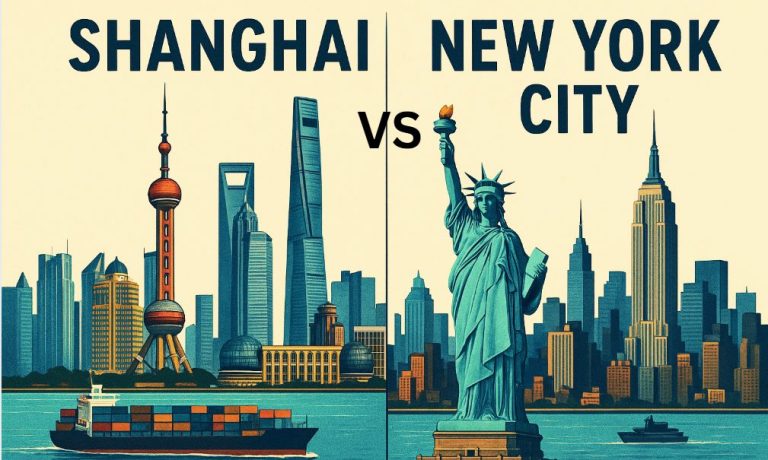






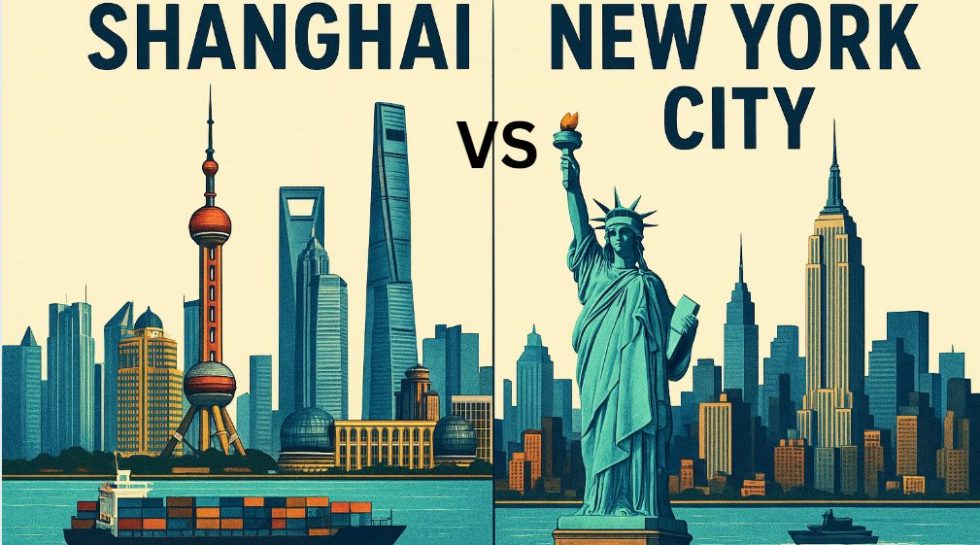
In the 21st century, the global economy is increasingly defined by the competition between cities rather than nations. Among these, Shanghai and New York City stand out as two of the most powerful and influential hubs, each embodying different strengths. One is the world’s busiest port, driving China’s rapid ascent in global trade; the other remains the financial capital of the world, anchoring international markets and investment. Their rivalry is not just about economic statistics but about geography, innovation, and the future direction of global commerce.
From Wall Street to the Yangtze: Competing Visions of Global Power
In recent years, the competition between Shanghai and New York City as the world’s leading economic hub has intensified. Shanghai, the world’s largest port, symbolizes China’s rise in global trade through its unmatched cargo-handling capacity. In contrast, New York City, though smaller in cargo volume, wields influence as a center of finance, trade negotiations, and global market strategy. Together, they represent two complementary forms of economic power: Shanghai as the engine of physical trade, and New York City as the nerve center of global finance.
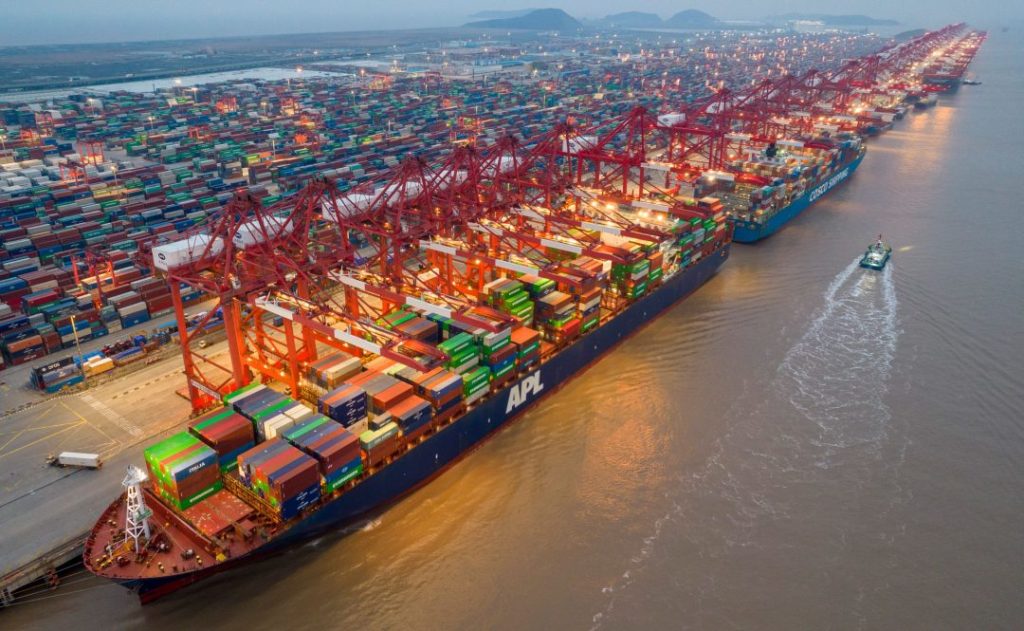
Although New York City’s dominance grew steadily throughout the 20th century, the pace of Shanghai’s progress in the 21st century has been nothing short of astonishing. In 2004, Shanghai’s container traffic was nearly equal to that of Shenzhen, at around 14.5 million TEUs according to the World Shipping Council. Yet in the years that followed, Shanghai’s throughput rose rapidly year after year. Today, it holds the title of the world’s busiest container port, surpassing Singapore by a margin of more than 10 million TEUs.
Economic Strength and Influence
New York City has long been the world’s financial capital, home to Wall Street, the New York Stock Exchange (NYSE), and numerous multinational corporations. Its economic infrastructure is unparalleled, with a robust legal framework, a deep pool of talent, and a culture of innovation and entrepreneurship. The city’s ability to attract foreign direct investment (FDI) is a testament to its global influence. As of the latest data, New York City’s GDP stands at approximately $1.5 trillion, making it one of the most economically powerful cities in the world.
Shanghai, on the other hand, has rapidly ascended the ranks. China’s economic reforms and opening-up policies have transformed Shanghai into a financial powerhouse. The city boasts the world’s largest container port, facilitating massive trade volumes. Furthermore, the Shanghai Stock Exchange is a key player in global markets, and the city’s growing financial district, Lujiazui, rivals Manhattan in terms of scale and ambition. Shanghai’s GDP is estimated to be around $900 billion, reflecting its significant economic growth and potential.
Technological Advancements
Both cities are at the forefront of technological innovation, albeit in different ways. New York City’s tech ecosystem, anchored by Silicon Alley, is a major driver of the city’s economy. Its focus on fintech, cybersecurity, and digital media has attracted substantial venture capital, top-tier talent, and a dynamic start-up culture.
Shanghai, meanwhile, is rapidly closing the gap, fueled by massive investments in technology and innovation. The city is positioning itself as a global leader in AI, smart cities, and fintech, with numerous tech parks and innovation hubs supporting this vision. From ubiquitous mobile payments to cutting-edge smart infrastructure, Shanghai demonstrates a highly integrated, tech-savvy approach that permeates everyday life.
Together, these cities showcase two distinct but complementary models of urban technological advancement: New York as a hub for digital enterprise and finance-driven innovation, and Shanghai as a leader in applied technology and smart urban development.
One Belt One Road Initiative
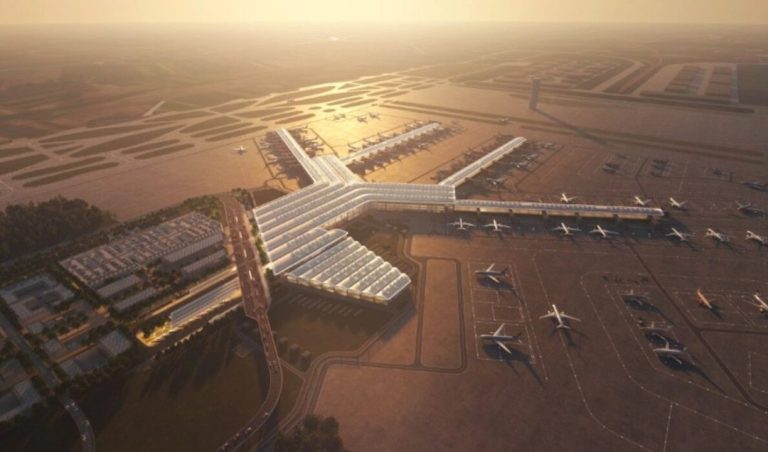
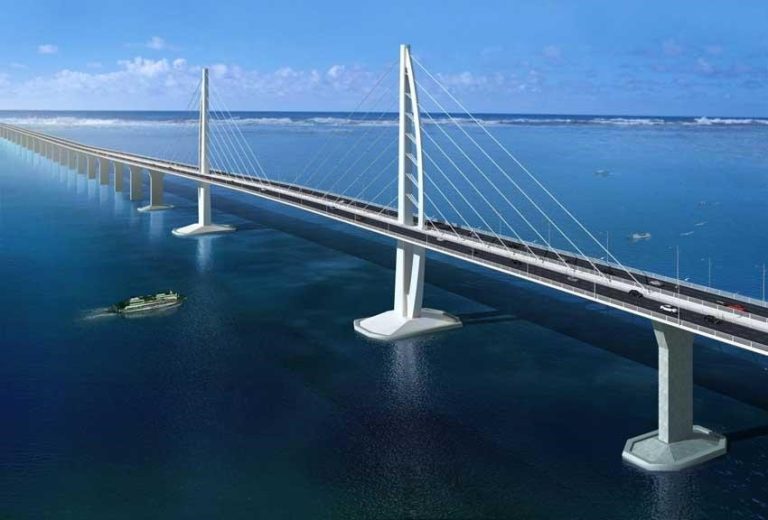
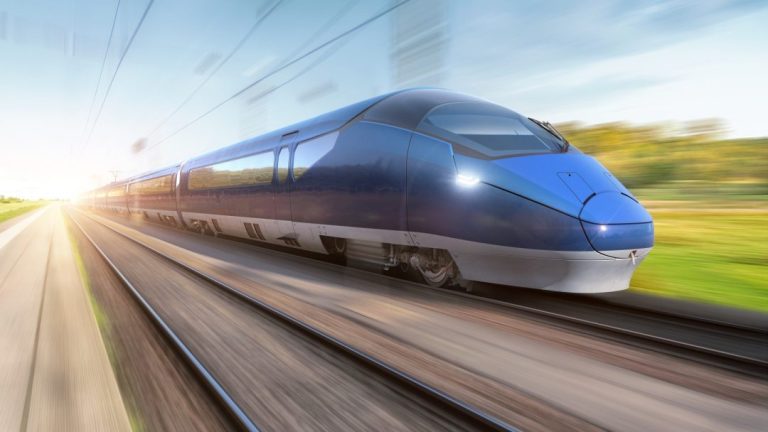
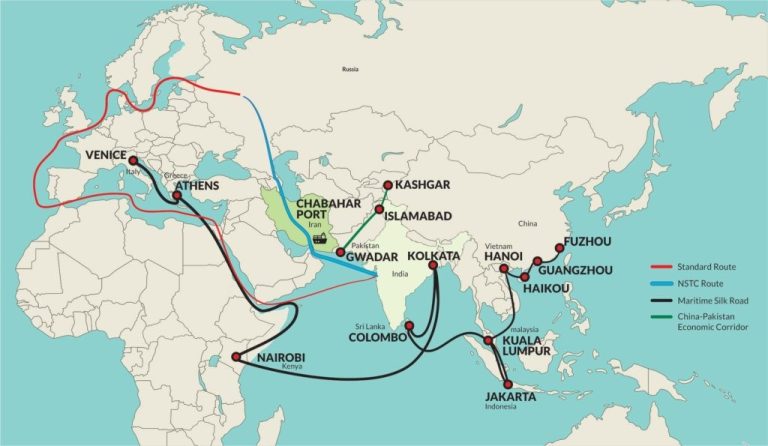
Shanghai plays a crucial role in China’s One Belt One Road initiative, which aims to enhance global trade routes and infrastructure. As part of this network, Shanghai is not only connected to the world by sea but also serves as the starting point for high-speed rail, extensive road networks, and two major airports, linking China’s main maritime hub to other countries by land, air, and sea. In contrast, New York City is primarily connected internationally via maritime routes, with limited direct ground connections to the world’s largest ports, giving Shanghai a broader logistical reach in global trade.
Weather, Geography, and Access in Global Trade
New York is known for its harsh winters, which can significantly disrupt freight transfers during certain parts of the year. In contrast, Shanghai remains operational year-round, as its weather has far less impact on logistics. Additionally, Shanghai is geographically closer to the roughly 50 percent of the world’s population concentrated in South Asia, giving it superior access to some of the most densely populated and fast-growing markets. By comparison, New York is far from the Panama Canal and must traverse two oceans to reach South Asia, making its connection to these key markets less direct.
Transport Facilities
New York City boasts an extensive and efficient transport system, including subways, buses, and commuter rails. Its three major airports—JFK, LaGuardia, and Newark—connect the city to destinations worldwide. Additionally, the Port of New York and New Jersey is one of the largest in the US, facilitating significant cargo throughput.
Shanghai, meanwhile, has developed world-class transportation infrastructure. The Shanghai Metro is one of the longest and busiest in the world, and the city is served by two major airports, Pudong and Hongqiao, which handle millions of passengers annually. Shanghai’s port is the busiest container port globally, underscoring its critical role in international trade. The city’s high-speed rail network further enhances connectivity, linking Shanghai with other major Chinese cities and beyond.
Future Prospects
The future leadership of either city will depend on several factors. Economic policies and regulatory environments will play crucial roles in determining which city attracts more global businesses and talent. Infrastructure development, particularly in areas like transportation and technology, will be essential in supporting continued growth.
Global market trends will also influence the balance of power. As Asia’s economic influence grows, Shanghai’s position may strengthen. However, New York City’s established networks and resilience make it a formidable contender.
In conclusion, the competition between Shanghai and New York City to be the leader of the world is a dynamic and evolving narrative. Both cities are poised to shape the future of global finance and trade, with their unique strengths contributing to their potential dominance. It is anticipated that Shanghai will prove in the future to move the world trade center from NYC to its location. Whether Shanghai will surpass New York City remains uncertain, but the competition itself drives both cities to innovate and excel, benefiting the global economy as a whole.