



Saudi Arabia scales back its $500 billion NEOM megacity, with just 2.4km set for completion by 2030—a stark retreat from its original futuristic vision.
Saudi Arabia’s $500 billion NEOM megacity, the crown jewel of Crown Prince Mohammed bin Salman’s Vision 2030, is undergoing a major reassessment due to financial and logistical hurdles. A report by Middle East Eye reveals that the Saudi government is reevaluating the scale and timeline of this futuristic development, signaling a shift toward pragmatism in its ambitious economic transformation plan.
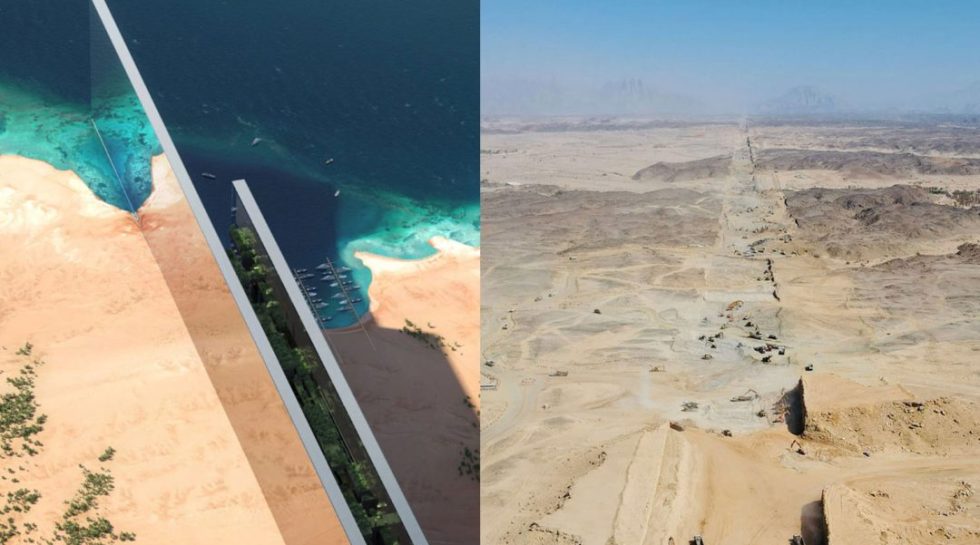
NEOM’s original budget of $500 billion makes it one of the most expensive projects ever conceived, dwarfing many global megaprojects. However, funding this vision is proving challenging. The Line, NEOM’s flagship 180-km linear city, was initially slated for its first phase completion by 2030, but delays now seem inevitable due to financial and technical constraints.
According to Middle East Eye, by 2030, Saudi officials now expect fewer than 300,000 residents to live in the city—far below the initial projection of 1.5 million. Additionally, only 2.4 kilometers of the city are set to be completed by that time. This means that by 2030, only 1.3% of the NEOM project will be completed—a stark contrast to its original ambitions. The projections for this mega-project appear to have been wildly unrealistic, prompting authorities to reassess NEOM’s master plan in light of actual progress and feasibility.
Navaxity: Since Mohammed bin Salman came to power, Saudi authorities have intensified efforts to diversify the economy beyond oil. In recent years, they have focused on developing non-oil sectors—such as tourism, sports, and technology—to reduce the kingdom’s reliance on oil revenues. These efforts have been reflected in the country’s megaprojects.
Through ambitious projects like NEOM, Saudi Arabia aims to present a bold, futuristic vision to the world. However, analysts view this rush toward ultra-modern developments as part of a growing—and increasingly futile—competition among Gulf states, where Dubai remains the undisputed leader in high-stakes urban ambition.
Just a decade ago, Saudi Arabia’s focus was on expanding pilgrimage infrastructure around Mecca and Medina, relying heavily on Hajj revenues. Now, in a dramatic shift, the Kingdom has adopted the same aggressive development model as its neighbors—especially the UAE and Qatar—placing big bets on a future beyond oil.
Experts argue that Saudi Arabia must undertake a comprehensive reassessment of its Vision 2030 blueprint—particularly megaprojects like NEOM and Riyadh’s massive park. Critics warn these initiatives risk not only draining vast financial resources but also triggering significant ecological consequences, calling into question their long-term viability.